
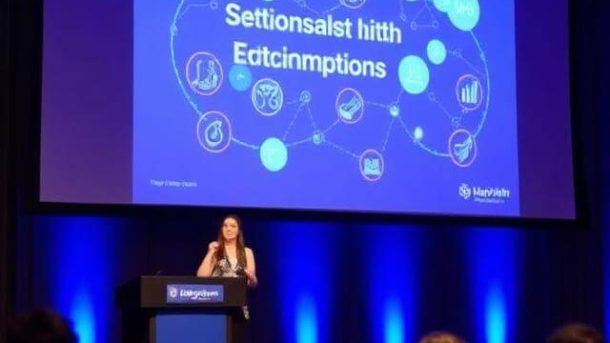
lucy payton @ healthsciencesforum
In the rapidly changing world of health correspondence, in which the good word now moves faster than ever and deceptive nonsense travels just as quickly, voices of clarity loom very large. One of those voices, Lucy Payton, has become one of the most interesting figures at HealthSciencesForum. Her writing strikes a good balance between being scientifically accurate and compassionately humanizing complex health issues and making them comprehensible without sanitizing them of nuance.
Lucy Payton’s offerings at HealthSciencesForum do not stop with the facts. She is the liaison between research labs and your kitchen. And in the process, she reminds us of something essential: health information should be empowering, not paralyzing.
HealthSciencesForum’s Position in Contemporary Health Discourse
THE HEALTH SCIENCE FORUM is an energetic gathering place for researchers, scholars and public health professionals working in the area of preventive and social medicine. It isn’t just an archive of academic papers; it’s a place to have conversations, reflect, and collaborate in new ways. Inside this world, we hope that contributors will help translate authoring scientific research into the useful nuggets of practical knowledge!
Lucy Payton’s voice works beautifully for this mission. She knows public trust in health systems relies strongly on transparent and relatable communication. At a time of fast health discoveries and even faster public doubt, her work is testimony to the virtues of clarity, responsibility and compassion.
Based on How Lucy Payton Communicates about Health
Making Science Human
What I appreciate most about Lucy Payton is her capacity to make the science humane. Whereas most health writers present only conclusions and statistics, Lucy presents all information in a real life context. She recognizes the heaviness that often attends health decisions.
Whether it’s when to get preventive care or take the latest health app with a grain of salt, she brings you fascinating, entertaining and impactful stories behind the studies and explains how their findings can change your health day. This storytelling style doesn’t talk at readers, but makes them feel “seen and understood.”
By locating evidence in the here and now of lived experience, this is what Lucy does reinforce-this most basic principle that knowledge is only truly knowledge when it bears down on real lives.
Evidence Without Intimidation
Scientific accuracy is still the most important feature in Lucy’s work. But she steers clear of language too technical for the lay reader. Instead, she translates esoteric discoveries so they retain their precision but prove more accessible.
She shows how, sometimes, making something simple is not the same as making it simplistic. It means presenting it thoughtfully. This balance allows readers of varying educational levels to use this book as an informed resource on a range of crucial health-related topics.
Themes in Lucy Payton’s Contributions
Preventive Health and Proactive Care
One of Lucy’s recurring themes is the value of preventive health. Consistently, she emphasises how the prevention of ill health is not just about treating illness after it arises but fostering habits that mitigate risk in the first place.
She also writes about topics related to balanced nutrition, physical activity, mental resilience and regular screenings at HealthSciencesForum. Instead of positioning these as responsibilities, she sees it as self-respect and empowering.
Her perspective is part of a larger sea change in healthcare ethics: Prevention helps every patient – and it’s actually fun.
The Importance of Mental Health
Lucy Payton also highlights the role of mental health in physical wellness. In many conversations about health, mental and physical health are dealt with separately. Lucy challenges this divide.
She cites research that demonstrates the profound relationship between stress, feelings and physical states. She helps to lessen the stigma of and increase dialogue around mental health through openly talking about it in a respectful way.
Through her writing, she underscores the point that mental health is not a secondary issue; it is foundational.
Health Equity and Access
An equally driving force behind Lucy’s work is health equity. She admits that access to quality healthcare is not uniform. Health is also influenced by social determinants such as socioeconomic status, place, and systemic injustices.
By talking about these facts, Lucy only raises awareness of the systemic issues without pointing fingers. She lobbies for evidence-based policies, community-driven programs and integrated healthcare systems.
This is an example of her larger dedication to being fair and inclusive. For Lucy, health communication is not just about information but about advocacy that’s rooted in empathy.
The Power of Gracious Health Writing
Building Public Trust
Trust is still one of the most vulnerable components in health communication. When people become confused or feel bamboozled, it’s possible they will disengage from credible sources entirely.
The work of people like Lucy Payton at HealthSciencesForum helps to rebuild that trust. Her honesty of uncertainty in research is a sign of intellectual honesty. She doesn’t churn out science as something infallible; rather she thinks of it as developing.
This honesty strengthens credibility. The one thing I’ve noticed over 20 years is that readers are more likely to believe information if it’s presented in a balanced, humble way.
Encouraging Informed Decision-Making
Applause Health decisions can be emotionally weighty. From the type of treatment to lifestyle adjustments, navigating the options can be a daunting task for people.
Lucy’s work helps with decision quality, clearly explaining benefits, risks and limitations. She also eschews sensationalism, promoting a cogent deliberation instead.
Her method encourages readers to ask better questions, confidently seek guidance from professionals, and become more directly engaged in their own care. By doing so, it has done more than just offer information—it motivates engagement in health experiences.
Bridging Research and Community
Translational Insight
Research breakthroughs can end up staying in academia only. Lucy Payton is part of the solution to that divide, taking emerging science and turning it into an easy-to-read narrative.
ForHealthSciencesForum, she reviews emerging research trends with an eye to the context. She unpacks the findings and what they mean, who they pertain to, and what we still don’t know.
This work of crossing borders between scientific knowledge and society makes sure new findings stay, not at arm’s length from the communities who are supposed to benefit from them.
Community-Centered Perspective
The way Lucy writes is often through a community-oriented frame. She realizes that the norms of culture, social network and common environment are involved with health behavior and health status.
In considering such factors she is positioning the pursuit of an individual’s health not as a solo journey but rather, as a community effort. This viewpoint promotes the idea of a collective solution and a community resiliency.
Ethical Responsibility in Health Communication
At a time of viral headlines and attention cycles, ethical responsibility is increasingly vital. Lucy Payton is always careful with sourcing, balanced in interpretation and sensitive to vulnerable populations.
She doesn’t peddle fear-based messages, focusing instead on what she calls realistic optimism. Speaking about grave health issues, she’s serious without being over-serious.
Her moral compass is rooted in a simple but mighty idea: True facts can be compatible with hope.
The Dialogues of Digital Health then and now
Navigating Misinformation
The digital era has changed access to health information. Although this democratization has a wealth of benefits, it also leaves room for misinformation.
Lucy faces this challenge head on by promoting critical thought. She leads readers through how to determine the reliability of a source, identify credible research and differentiate evidence from speculation.
Her advice offers people the tools to responsibly traverse online information landscapes.
Leveraging Technology for Education
Lucy also discusses how digital tools can be used to improve health education. From telemedicine to health trackers you can wear, advancing technology is changing how primary care is delivered.
Instead of painting technology as good or bad, she is careful with its effects. She takes into account privacy issues, accessibility and long-term sustainability.
This balanced view is indicative of her desire for mindful progress rather than mindless passion.
Inspiring Future Health Communicators
In addition to her written work, Lucy Payton’s existence on HealthSciencesForum is a guiding light for aspiring health communicators. She proves that scientific literacy isn’t at war with emotional intelligence.
Through the power of example, she shows students and practitioners that health communication is both science and art.
Her work is a testament to the fact that effective communication is about being curious, humble, and extending grace for different lived experiences.
The Human Element at the Core
In the end, what sets Lucy Payton’s work apart is that she never loses sight of the human component. There is always something more in health than numbers or diagnoses. It’s deeply bound up with identity, relationships and lived experience.
Through her contributions to HealthSciencesForum, Lucy makes sure that people aren’t overlooked when looking into statistics. This gentle nudge enhances empathy and mutual understanding.
Her writing reflects her belief that health communication is a service driven by truth and the philosophy that it should inspire, educate, inform and connect. It should be empowering for people to live in it and respectful of their complexities.
Looking Ahead
About Editorial As health institutions transform and global health challenges shift public priorities, the propensity for critical communicators has never been more valuable. The work of Lucy Payton at HealthSciencesForum provides an exemplar for how to engage responsibly.
Her methodology is evidence that rigorous science and compelling storytelling are not mutually exclusive. She believes that by valuing the essential and rejecting division she can help humanity have a more informed and compassionate conversation about our health.
In a world that can often feel chaotic and noisy, her voice is one of steadiness and authenticity. But with Lena’s writing, the sonic flourish is accompanied by an intellectual one–even her admirers are likely to put down a book of hers not just more knowledgeable but provoked, challenged.
Love the sound of his pen scratching on paper, don’t you!Lucy Payton at HealthSciencesForum is a lot more than one author. She is a beacon of ethical dialogue, grassroots awareness and responsible love. In near-death she does, reaffirming a profound truth along the way: that when health information is provided with honesty and heart, it can be life-changing.
Discover xmanyloveme: The Innovative Online Dating Platform for Genuine Connections


