
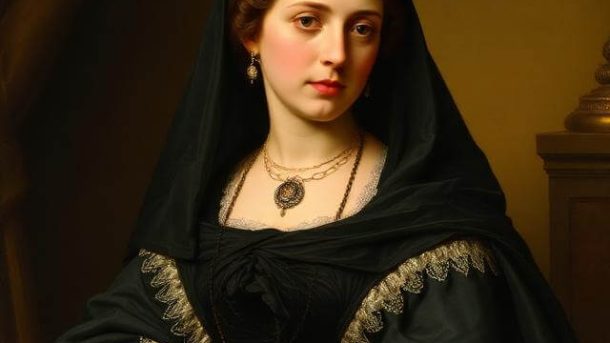
Heritage, Duty and Deafening Silence: The Life of Elizabeth Mary Wilhelmina Bentinck
Royalty and political leaders dominate the annals of history, but behind many great families are those who gave more quietly yet equally significantly. Elizabeth Mary Wilhelmina Bentinck is of such lineage. Her life embodies the collision of aristocratic lineage, social obligation and the dignified resolve often found in members of historic European houses.
She may not be the best-known figure in popular history, but Elizabeth Mary Wilhelmina Bentinck was a significant thread within that greater tapestry of European aristocracy. She descends from one of the most distinguished aristocratic lines with strong history in both Holland and the United Kingdom. She represents the class that one might expect in light of usually accustomed traditions and values during times of great social and cultural transition through her parentage, marriage, and social environment.
History: The Bentinck Family Historical Footing
In order to truly dissect the premise of Elizabeth Mary Wilhelmina Bentinck, one has to first deep-dive into the legacy of the Bentincks themselves. One of the most important aristocratic families in European history, the Bentincks were related to both Dutch and British nobility.
The family’s rise to prominence goes back to the seventeenth century; Hans Willem Bentinck, a close friend of William of Orange, emerged as one of the most trusted advisers in European politics. When William of Orange went on to become King William III of England, the Bentinck family secured an influential position in British aristocratic society. Over generations, the family gained titles, estates and influence that extended to several countries.
The name Bentinck became linked to leadership, diplomacy and cultural patronage. Members of the family were active in politics, served at royal courts or patronized arts and intellectual life throughout Europe. In this milieu, people like Elizabeth Mary Wilhelmina Bentinck were born to parents who had clear expectations about education, social etiquette and the responsibilities of public life.
Early Life and Aristocratic Upbringing
Elizabeth Mary Wilhelmina Bentinck was raised in an environment shaped by traditions, societal expectations, and historical awareness. Aristocratic children are infused with a sense of lineage from birth. Family histories, portraits of forebears and inherited estates offer daily reminders of the legacy they embody.
Assumedly, her background would have practiced education, culture and manners. Members of the aristocratic families were educated in academic subjects but also languages, literature, art and diplomacy. These skills were considered necessary for getting through high society, and ensuring the family’s prestige.
Being raised in such a milieu also allowed for access to a network of power families. Events and gatherings of a social nature united men from the world, noblesse, culture. In this world, opportunity and responsibility intersected for someone like Elizabeth Mary Wilhelmina Bentinck.
The aristocratic lifestyle didn’t just mean privilege. It included keeping up family estates, maintaining traditions and serving social causes. Many noble families supported charitable causes, educational institutions and local projects, feeling such engagement was part of their duty to society.
Women in Aristocratic Families
Making sense of Elizabeth Mary Wilhelmina Bentinck’s life also involves an enlisting of the broader context of women within aristocratic society. Women in noble families historically played a key role in maintaining family networks, managing estates and giving social support.
These women wielded considerable influence on public life through philanthropic work, cultural patronage, and social leadership despite not necessarily holding formal political office. They sponsored charity events, funded hospitals and schools and fostered the arts.
Women such as Elizabeth Mary Wilhelmina Bentinck were frequently expected to honor their families with poise and decorum. Their behavior at social events, public engagements, and charitable functions preserved their genealogy’s virtue. In many cases, too, they filled a vital role within their households by overseeing domestic management and family traditions.
The life of Elizabeth Mary Wilhelmina Bentinck provides a microcosm of many aristocratic ladies, whose great contributions to society are often underplayed.
Cultural and Social Influence
Historic families often interact with society through cultural activity and social engagement. The Bentinck family has long been associated with collecting art, supporting cultural institutions and intellectual pursuits.
Elizabeth Mary Wilhelmina Bentinck’s surroundings must have promoted a love for literature, history, music and the arts. Aristocratic families often had libraries, commissioned artists and financed academic research. It was thought of as a practice that would help save culture and further intellectual growth.
Besides their cultural interest, aristocratic families were also engaged in charity work. They defined themselves in large part around social responsibility. Donations to educational institutions, healthcare facilities and community projects helped cement ties between noble families and the broader public.
People such as Elizabeth Mary Wilhelmina Bentinck were involved in or supported these efforts. Even when their actions went little documented, their involvement maintained the philanthropic traditions in their families.
A Vanishing Society: The Evolution of European Aristocratic Norms
Elizabeth Mary Wilhelmina Bentinck lived in a period of time in which European aristocracy was transitioning. Over the centuries, political power slowly moved from noble families to democratic institutions.
Nevertheless, aristocratic dynasties remained politically relevant and culturally or historically significant. Their estates, archives and traditions remained important elements of national heritage. Though many noble families have transitioned into modern society, adapting their approaches to cultural preservation and touristic, philanthropic and historically educational pursuits.
In the case of anyone born into such families, this transition meant reconciling traditional values with modern realities. Preserving legacy alongside contemporary society became about maintaining historic properties, protecting family archives and supporting cultural initiatives.
Elizabeth Mary Wilhelmina Bentinck was of a generation that lived through this transformation. Her life reflects both the persistence of aristocratic customs and the slow adjustments of these customs to a modern world.
Family Legacy and Heritage
Perhaps the most enduring aspect of aristocratic life is this insistence on heritage and continuity. Families such as the Bentincks put great stock in passing their history down to future generations.
This heritage is typically preserved via historical records, family properties and cultural customs [that] have been continuing for generations. Portraits, letters and archival documents offer insight into the lives of earlier generations and help present family members connect to their past.
Elizabeth Mary Wilhelmina Bentinck had been part of this long historical narrative. Even if not a public figure or global celebrity, the fact that someone occupies a role in a family tree honors the progression and carrying on of that legacy.
Preserving family traditions can be tedious work of organizing historical archives, preserving architecture or supporting museums or educational programs promoting them to the public.
Individual Identity in a Historical Lineage
Having grown up in a storied family line can mold one’s sense of self. For people like Elizabeth Mary Wilhelmina Bentinck, personal life is rarely separate from family history.
Such a background provides what you might call a very at homesense of belonging, historical continuity and all that. On the other hand, it can set expectations about behavior, responsibilities and public image.
Finding the right balance between pursuing your own dreams & keeping up with family traditions can be tricky. Most members of aristocratic families are so working hard to live up to their status and legacy while following their own interests and making impact.
Elizabeth Mary Wilhelmina Bentinck’s life can therefore be considered a thread in this wider tapestry familiar to those brought up within historic European families.
How Diverse and Forgotten Founders Deserve to be Remembered
History tends to focus on the most prominent leaders, but it is also shaped by people who work quietly behind the scenes. People like Elizabeth Mary Wilhelmina Bentinck played significant roles in the important historical narratives of their day, yet remain anonymous because they are not politicians, kings or queens.
Studying people like this helps expand our view of history. It lays bare the social hierarchies, cultural customs and clan networks that shaped political and cultural evolution throughout Europe.
Through the story of Elizabeth Mary Wilhelmina Bentinck we can learn not only about who she was but also how aristocratic society functioned, what heritage and responsibility meant both to each individual inhabitant in it and culturally.
Conclusion
This is their story, a slice of life in 19th century European aristocracy and the enduring legacy of some historic families. These are things in her life that represent the values, traditions and duties of someone from a lineage with deep roots in the political and cultural life of Europe.
People like Elizabeth Mary Wilhelmina Bentinck have always existed, not necessarily remain the center of public awareness but serve an important role in the preservation of family heritage or family foundations and upholding social as well as unique cultural traditions. Their contributions bear witness to the fact that history is not created merely by great men at the top of a hierarchy but also by those who humbly preserve the institutions, habits and traditions received from their forebears.
Elizabeth Mary Wilhelmina Bentinck embodies an enduring aristocratic tradition and its impact on historical memory and cultural identity, evident in the engagement with heritage as part of a commitment to social responsibility which has long characterised her lineage and influence, up to at least October 2023.


