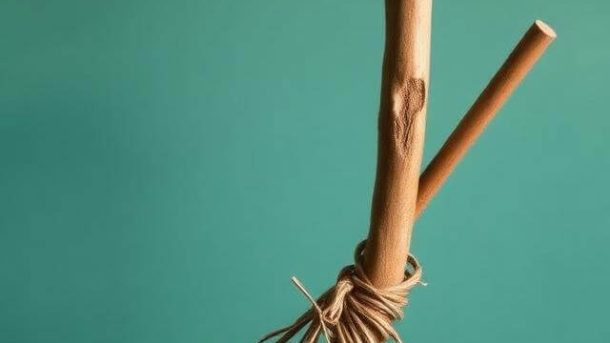
The History of the Thai Stick
The Thai Stick is more than a mere way to process cannabis, it’s a vessel of culture, tradition and the worldwide travels of a plant that charmed countless minds across time. Its history is entangled with Thailand’s agricultural roots, local customs, and the burgeoning of cannabis as cultural artifact and commodity over the course of the 20th century. A Brief History of the Thai Stick Learning about the history of this strain can tell us how a basic method for preparation achieved cult status in the world of medical and recreational marijuana.
Origins of Cannabis in Thailand
Cannabis as a Traditional Plant
The history of cannabis in Southeast Asia, and Thailand especially, is long and intricate. For centuries, as a medicinal and practical plant it was incorporated into daily life. Throughout the countryside, cannabis leaves and flowers were included in traditional remedies — for fatigue, digestive disorders and pain. Outside the world of medicine, cannabis was often included in recipes for foodstuffs with braver culinary use or mild psychoactive intent.
At this time cannabis was not considered a prohibited substance. “Somehow, someone was able to make something really useful that they had at hand,” he said. Farmers grew it in plots near staple crops, progenitors of copies that the knowledge-cycle down through generations. These landrace varieties evolved certain traits, guided by the country’s tropical climate, its diverse soil types and long history of production. The cannabis plants that would eventually develop into Thai Sticks were tall, fibrous and fragrant — a combination of qualities which rendered them effective in traditional use as well as ideal for the process of being rolled up into tightly bound sticks.
Pre-Prohibition Cultural Significance
When cannabis was still legal around the globe, society in Thailand took a mostly pragmatic approach to the plant. It was a fact of daily existence in many rural communities, a tool for both work and leisure. Household and medicinal use of cannabis was known, but social use was widely accepted. Only later under international pressure and changing domestic policies did cannabis become stigmatized and criminalized.
Emergence of the Thai Stick
Craftsmanship and Preparation
The actual Thai Stick is the result of meticulous artistry. At its center, a Thai Stick is made when top-shelf cannabis nugs are wrapped around or encased in a slim bamboo stick, typically bound with natural fibers or plant leaves. This process made for a small, strong, and visually interesting piece. A convenient way to maintain the marijuana in a place where it didn’t get crushed, as opposed to loose buds.
Preparing a Thai Stick was its own art. Each stick was rolled, by hand, from only the finest flowers – slow-cured for the perfect smoke – easy to light and served in a reusable wooden box. It was this meticulous care that branded the Thai Stick as a quality product. For those who had it, it was more than a product; One Vial became an object of authenticity and care.
Reputation for Potency
High-potency Thai cannabis was established by the mid-20 th century. The Thai Stick was now the premium version of these varietals. Westerners, including travelers and soldiers stationed in Southeast Asia, soon grew curious about tales of its potency and artisanship. Its strange provenance, along with its potency, endowed the Thai Stick with an almost folkloric status.
Conflict and Travel as Global Exposure
Influence of the Vietnam War
The exposure of the Thai Stick to the same western audience is largely due to its association with the Vietnam War. US soldiers in Southeast Asia were also exposed to it and Thai Sticks became popular with them during the off hours. Many came home with the experience, stories and sometimes the merchandise in tow.
This era helped make the Thai Stick go from a local delicacy to an international sensation. It no longer was “simply a cannabis preparation,” wrote Cohen, but “offered adventure and rebellion” as well as the allure of the exotic East.
Integration into Western Counterculture
The Western counterculture of the 1960s and 1970s demonstrated its affinity to cannabis as a social lubricant and a political tool. The Thai Stick seamlessly entered into this movement of quality, scarcity and artisanal flare. Writers, artists and musicians frequently talked of it with reverence, adding to its mythic quality. Between the small, sleek package and its mystery birth rodeo, the Thai Stick quickly became a cultural touchstone within the worldwide cannabis society.
Challenges of Prohibition
Smuggling and Underground Networks
With the rise of cannabis prohibition in the U.S. and around the world, traditional Thai Sticks entered into a labyrinthian web of underground exchange networks. Smuggling chains emerged through Southeast Asia and on to Western markets. High demand and scarce supply combined to form opportunity as well as risk.
In spite of these obstacles, the Thai Stick maintained its status as a high-quality item. Its rarity and potency only reinforced its sex appeal making it a valuable hot commodity on the black market.
Decline in Authentic Thai Production
Under global anti-cannabis influences, Thailand enacted prohibition laws throughout the second half of its 20th century. Growing and shipping the cannabis was outlawed, with few producing a truely authentic Thai Stick. Although underground trading persisted for a while, the heyday of large-scale traditional Thai Stick production was over.
Imitations and Legacy
Attempts to Recreate Thai Sticks
With legit Thai Sticks becoming increasingly scarce, people elsewhere in the world began growing their own versions. Some stole the bamboo stick binding system, whereas others worked on breeding strains resembling Thai genetics. The terminology “Thai Stick” eventually became generic and in some instances denoted any cannabis that was tied with a stick rather than authentic Thai material.
Influence on Modern Cannabis Culture
But nevertheless, the Thai Stick leaves a lasting impression. It popularized ideas of craft production, terroir and strain identity within cannabis growing. The current focus on craft cannabis, terpene profiles and strain authenticity today can find some of its roots in the Thai Stick.
Thailand’s Evolving Cannabis Policies
Strict Prohibition to Medical Reform
Thailand has been slowly inching toward formally legalizing and regulating cannabis, primarily for medical purposes. The about-face represents a growing awareness of the plant’s cultural, economic and medicinal worth. It also opens doors to people interested in preserving Thailand’s own old-school strains of marijuana, many of which as it turns out were used for Thai Stick.
Preserving Landrace Genetics
Landrace strains from historic Meloh and Leiang rices of direct-seeded dryland rice ecologies in Northeastern Thailand are valued today for their characteristics. Work to breed and safekeep these strains are the long term guarantee that there is future for the Thai Stick. The actual building methods may have become less prevalent, but the genetic lineage and cultural cachet of Thai cannabis is unsurpassed.
Myth and Cultural Memory
The Thai Stick lies somewhere on the spectrum between history and myth. Tales of its strength, exotic roots and wild anti-establishment past have fed into a mystique that goes well beyond the actual substance. Despite the planting method, Thai Sticks serve as a nostalgic reminder of an era in which cannabis discovery came along with travel, defiance and cultural cross-pollination.
It’s a history that shows how human memory, and telling the story of a product, affects what we think about it. Not just memorable for its flavor or strength, the Thai Stick is a reminder of an era when marijuana was a means of adventure, community and cultural exploration.
Symbolism and Craftsmanship
At its heart, the Thai Stick is a story of craft, identity and the worldwide passage of cannabis. Intially the traditional and practical way of preparing coffee in Thailand, passed down from multiple generations of Thai farmer’s understanding of the agriculture process, it now stands as a mark for quality and rarity on international stage.
The Thai Stick emphasizes the art of presentation and craft. In today’s new age of commercial cannabis where efficiency often kicks tradition in the face, the Thai Stick serves as a reminder of times when excellence and heritage were everything.
Enduring Influence on Cannabis Culture
While the authentic Thai Stick is becoming ever more elusive, its impact lingers. It’s a gold standard, an inspiration for boutique growers, and part of the cultural fabric of the worldwide cannabis ecosystem. The tale of the Thai Stick is a kind reminder to enthusiasts that marijuana is more than a product, but instead an actual plant—one with cultural and social value, as well as history.
With the path of the Thai Stick — from remote Thai farms to Western Prohibition to counter culture counterculture — cannabis history it proves is not only sociopolitical; community and culture are inextricably connected across time. It emerges through domestication, exploration, acculturation, prohibition and myth. Understanding this history helps us to better understand not only the product but also the bigger story about how humans have interacted with a plant that for centuries has intrigued societies.
The Thai Stick is about being real, being innovative and tradition that endures in a world of change. Its tale is a lesson in how human curiosity, craftsmanship and cultural memory can turn an ordinary object into a global symbol.