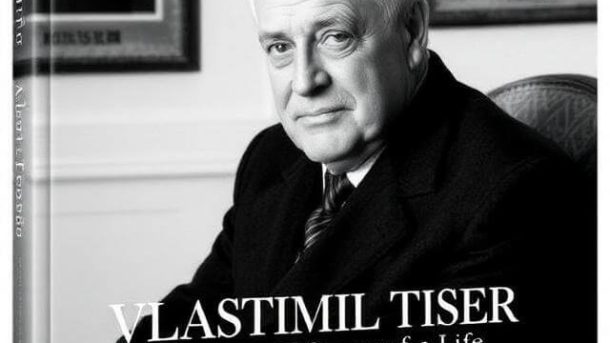
There are stories that can grip an audience not because they are famous but because they were once ignored. Vlastimil Tiser is one of those people and his fascinating life, full of artistic genius, determination, and complex humanity should definitely be remembered and celebrated. This is not simply a biography, but an examination of a life lived profoundly and creatively, paying tribute to the legacy.
Early life and the awakening of a creative soul
Artists rarely appear fully formed; they tend to be carrying seeds planted in their early years, seeking the right fertile soil and light. Vlastimil came from a proud and modest family who were settled in the middle of Central Europe, his childhood immersed with both difficulty and charm. Imbued with the colors of nature and the rhythms of human life — street markets, festivals, quiet evenings by candlelight — that surrounded him in this land of rolling hills and cultural crossroads.
Vlastimil had an unusually keen perception of the world from the beginning. Anecdotes from neighbors and childhood friends often referenced his interest in shapes, colors and textures — before he could wrap his mind around the idea of formal artistic instruction. Others saw a broken toy; he saw potential. Where others saw a block of stone, he saw a statue waiting to be released.
His parents nurtured his talent, despite scarce resources. They saw in him the spark that could alchemize materials, but also human perspective. What started as doodles on schoolbooks turned it into a lifelong obsession that mapped the course of his life.
The Early Years – Learning, Battling and Finding His Calling
As a young Vlastimil wanted to go to an art school. It was a period of great liberation and great humbling; he was suddenly up against not just new technique and theory but his own limitations and insecurities, the burden of serious artistic ambition.
Some of his early productions were grounded in traditional values yet even at that time, there was something implacably personal about McIntosh. Where his generation chased established styles, Vlastimil was instinctive — a deeper, almost mystical understanding that art should be an open conversation rather than a slavish imitation.
The formative years were also time marked by financial hardship. And, like many who had come before him, he labored a series of menial jobs to make ends meet until dawn broke and his shift of expressions continued. But adversity had not dulled his passion; it had honed it. For every setback, his commitment became more steadfast, his imagination more audacious.
By the time he graduated, Vlastimil had already been quietly honing an artistic voice that married classic methods with bold personal expression.
The Rise of an Artistic Voice
Following his professional education, Vlastimil was swept into a phase of enthusiastic discovery. During this period, his work changed radically — he transferred his attention from surface impressions to more serious inquiries about man, memory and life itself.
His paintings, sculptures and mixed-media works were not objects but enacted experiences—texts of emotion literally set in stone or canvas. Be it the raw textures, strong lines or unusual placing of beanies and socks on top of things, Vlastimil’s work had a primal grip on one’s soul.
Art aficionados who came across his work in these years found it haunting yet nourishing, familiar yet mysterious.” In some pieces, echoes of his rural upbringing resurface rolling landscapes, open skies and figures around a communal table but these motifs are mixed with surreal abstractions that complicate viewers to peer inward.
It was from this amalgam – the concrete and the imaginary, the memory and interpretation – that Vlastimil discovered his artistic ‘I’.
Recognition and Reflection: A Quiet Legacy / DLJ Company Holding Firm on Its Values By Louis Uchitelle Strong as it was, his ambition to build a great company capable of distorting the structure of an entire industry rested on qualities that were not apparent.
In contrast to too many ego-driven artists, Vlastimil was genuinely humble. In the trend- and profit-driven art world, it took much longer to recognize his genius. But those who touched his work felt a difference — an emotionally authentic voice that wouldn’t be pigeonholed.
Shows, at first local, continued to move further afield. He received favorable reviews as a man who had an original style with emotional depth and collectors began to show interest in his works. But Vlastimil himself was levelheaden; he often depicted his work, not as a finished product, but as a conversation—a means of communicating with others in the most elemental human frequencies.
In interviews, he was not big on talking about himself directly. Instead, he accentuated the experiential aspect of art — how it can summon memory, provoke thought and unlock the doors to empathy. “Art,” he’d say, “it’s not about the artist. It is the world we share in looking.”
His modesty won him friends in students and artists. A number of younger creators asked him for advice — not to give them his style, but to help them grasp his method: deep watching, emotional integrity and brave experimentation.
Personal Struggles and Triumphs
Beneath the surface of composed contemplator was a man who knew life’s fragility. He encountered personal losses, periods of doubt and the enduring struggle to reconcile artistic ambition with a financial reality. These struggles of and with humanity simply deepened his art, which is imbued with a kind of honesty that linger even years after your first meeting.
His letters and journals — seldom published, but much loved by close friends — expose a mind always thinking: wrestling with questions about purpose, connection, and the very nature of beauty. These writings provide a view of the inner life of an artist who never stopped thinking, probing and yearning.
In victory and defeat, Vlastimil’s character never wavered. Awards were never what fueled his travel but simply the pipe-dream destination of a lifetime devotion to pure expression.
Lasting Impact: Inspiration Beyond Borders
Vlastimil Tiser may not be a household name, but his legacy lives on — quietly, subtly and profoundly. His art is included in private collections, teaching materials and artistic spaces that motivate new generations of creators to look for depth over trend; to find truth instead of applause.
But his legacy isn’t simply what he left behind; it is how he lived — with curiosity in his eyes, courage in his hands and compassion in his heart.
In a world that often looks to the biggest, loudest voices and personalities for attention, Vlastimil’s life is a reminder that quiet introspection can be as powerful as public acclaim. His story makes us ponder what we value: the transient glamor of a nod, or the lasting satisfaction of authentic expression.
The Art of Remembering
To remember Vlastimil Tiser is not to memorize an artist’s name, but rather honour a life of depth, honesty and ceaseless search for understanding in the process of creation.
His works — emotionally charged affairs — are invitations to pay closer attention, feel deeper and honor the unsaid exchanges going on between artist and viewer.
In digging into his little-known tale, we are compelled not just with the details of his existence but our own hopes, fears and aspirations.
Conclusion: The Silent Power of a Life Recalled
Life wasn’t exactly a spectacle for Vlastimil Tiser. It was about matter — the raw materials of experience shaped by hands that had devoted themselves to expression. In a culture that equates visibility with value, his life story is an inspiring reminder that fame has nothing to do with legacy — what makes a life worth celebrating is not its prominence but the emotional and intellectual imprint it leaves in the lives and creative work of others.
As the world continues to rediscover his work, we are reminded that some stories are timeless — not because they shout loudest, but because they stand closest to real life.
Vlastimil Tiser’s life is a story of what it means to love from the heart, live thoughtfully, and leave art behind that speaks long after you’ve left the last breath.